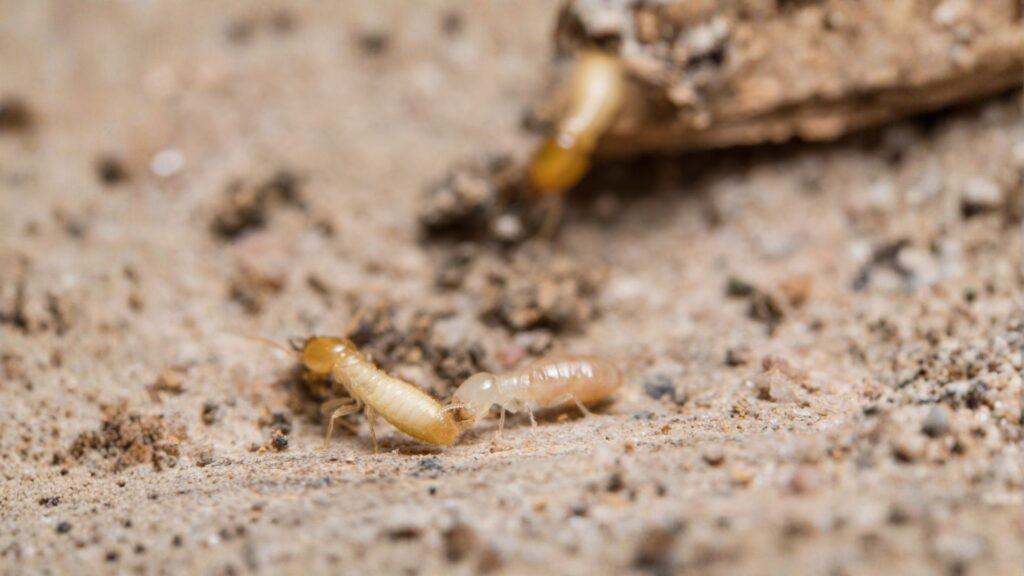
Termites can remain hidden inside walls, flooring, attics and structural wood long before noticeable damage appears. Southwest Florida’s warm temperatures and humid environment allow termite activity to remain a concern throughout much of the year.
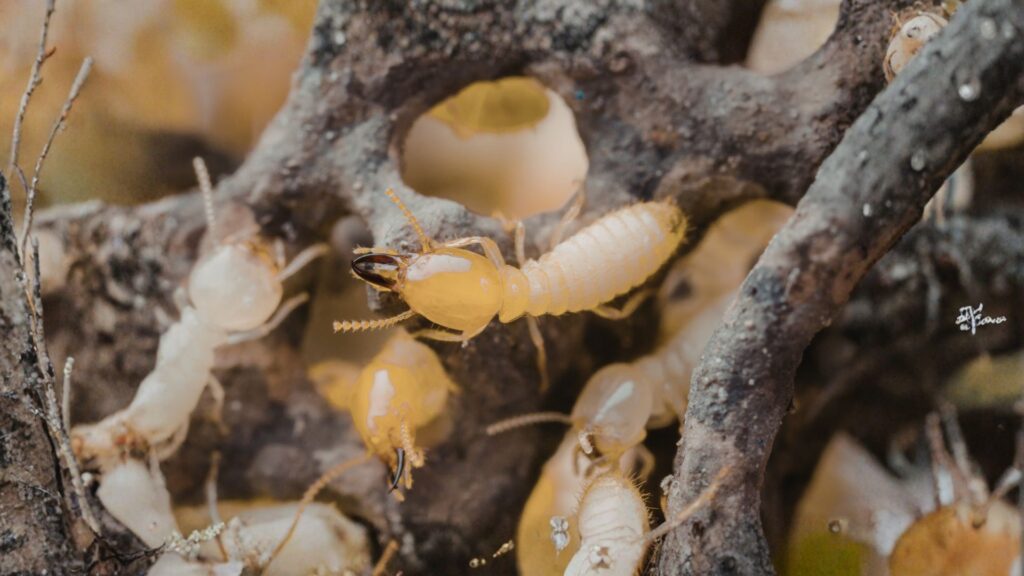
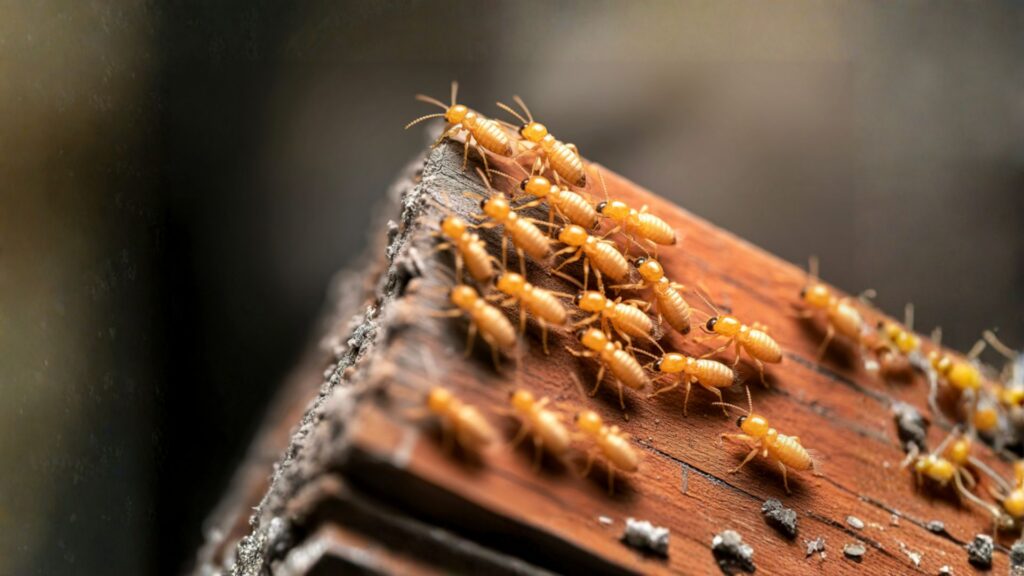
Termites are often called silent destroyers because much of their activity occurs inside wood, behind walls or beneath the soil. A property can have an active termite problem even when very few insects are visible.
Common signs of termite activity may include:
Mud tubes along foundations
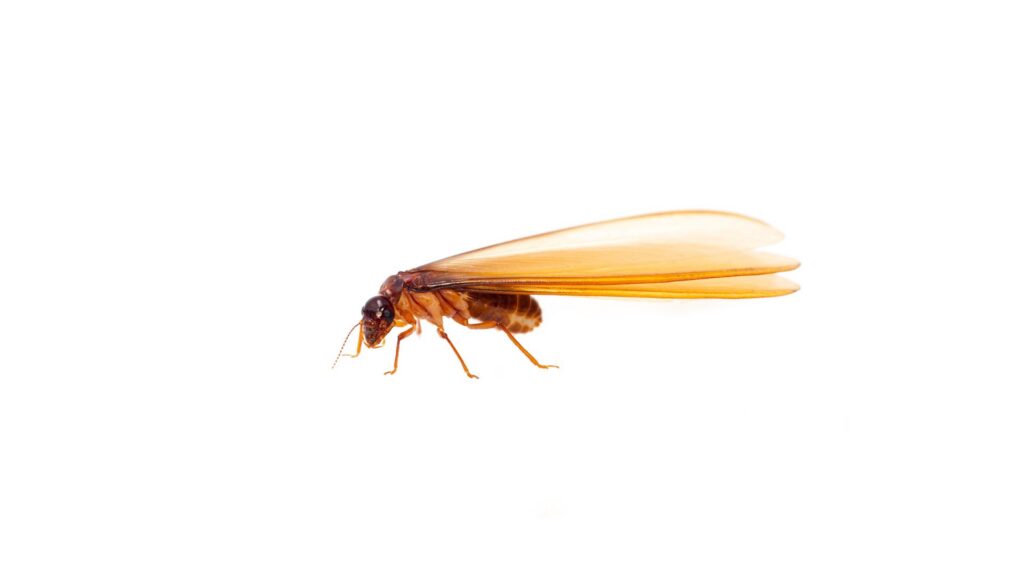
Discarded wings near windows, doors or light fixtures
Swarming insects inside or around the property
Small piles of termite droppings, also called frass
Wood that sounds hollow when tapped
Blistered, bubbling or damaged paint
Wood that appears soft, cracked or weakened
Visible damage in attic framing, trim, baseboards or other wood
Swarming insects are frequently mistaken for flying ants. Because different termite species require different treatment strategies, proper identification is an important first step.
Common Termites Found in Southwest Florida
Several types of termites may affect Florida properties. Two of the most common structural concerns in Southwest Florida are subterranean termites and drywood termites.
Drywood Termites
Drywood termites live directly inside the wood they infest and do not require continuous contact with the soil. They may infest attic framing, fascia boards, doors, furniture, trim and other wooden components.
One common sign of drywood termites is the appearance of small, pellet-like droppings beneath an infested area.
Subterranean Termites
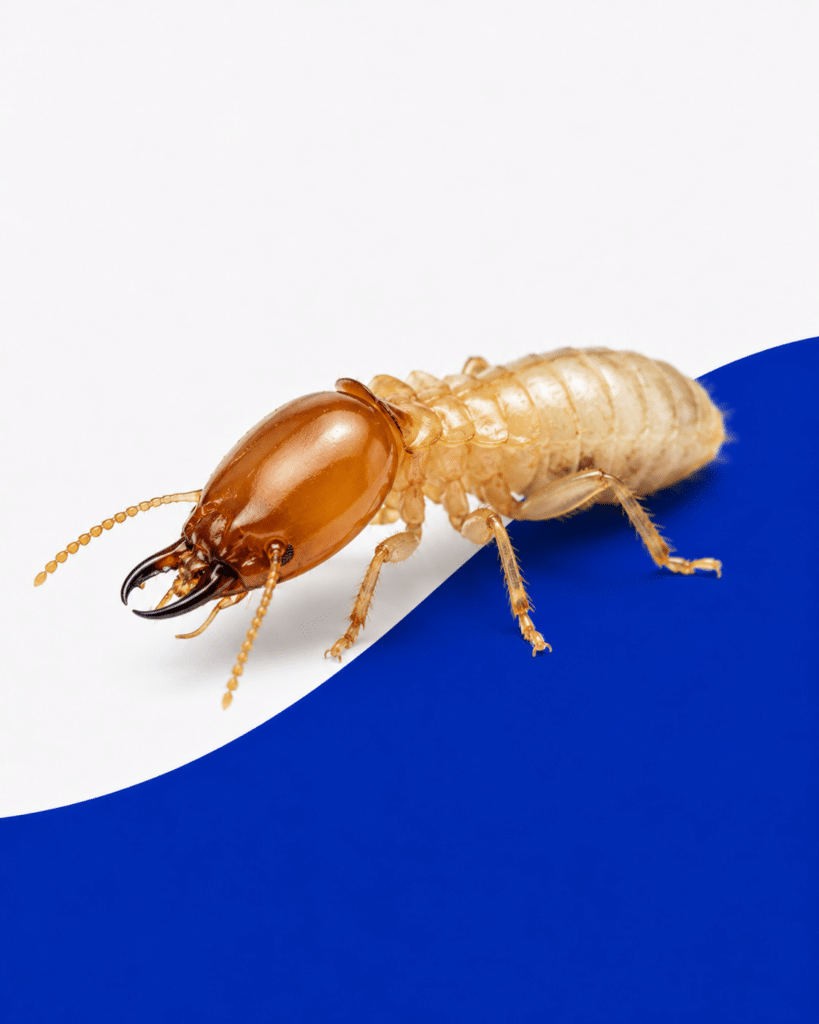
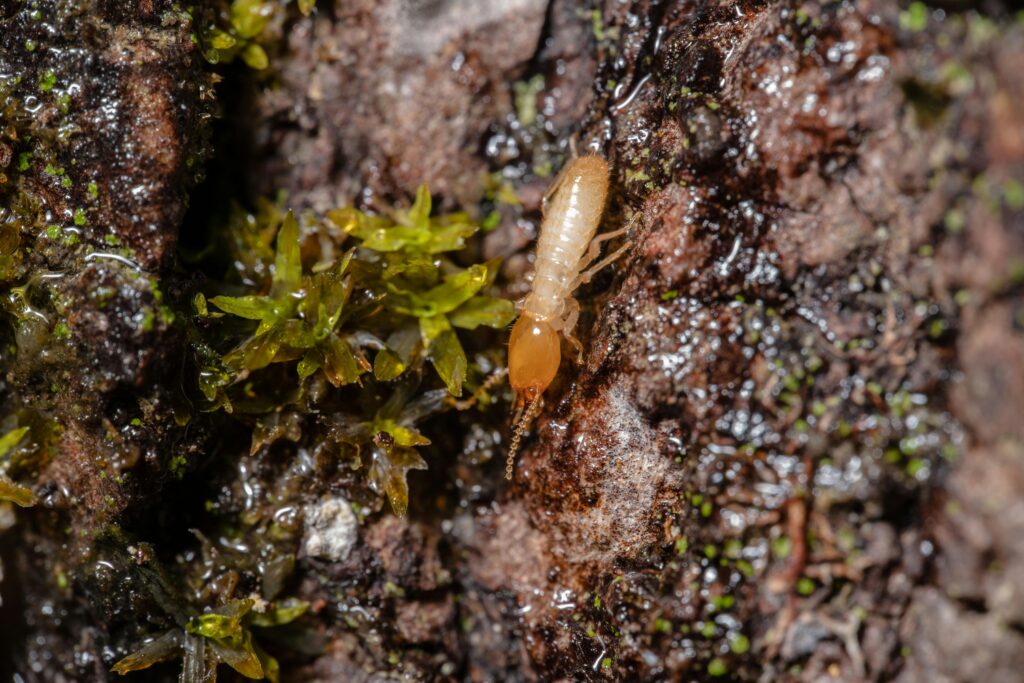
Subterranean termites generally live in the soil and travel between their colony and a structure. They may enter through small foundation openings or areas where wood comes close to the soil.
Mud tubes are one of the most recognizable signs of subterranean termite activity, although tubes are not always located in an easily visible area.
Formosan and Other Invasive species
Formosan termites are an aggressive type of subterranean termite capable of creating large colonies. Like other subterranean termites, they may travel from the soil into structural components and remain hidden until damage or swarming becomes noticeable.
Termites may feed inside framing, flooring, trim and other materials without immediately damaging the visible surface.
Small Entry Points
Subterranean termites can enter through very small openings around foundations, plumbing lines and construction joints.
Similar-Looking Insects
Flying ants and termite swarmers can look similar to an untrained eye. Misidentification can lead to ineffective treatment or an overlooked infestation.
Incomplete DIY Treatment
Store-bought sprays may kill visible termites without addressing activity inside the structure or beneath the soil. This could cause the colony to split and spread.
Our Termite Inspection and Treatment Process
Termite control begins with determining what type of termite is present, where activity is occurring and which treatment approach is appropriate for the property.
Inspection and Assessment
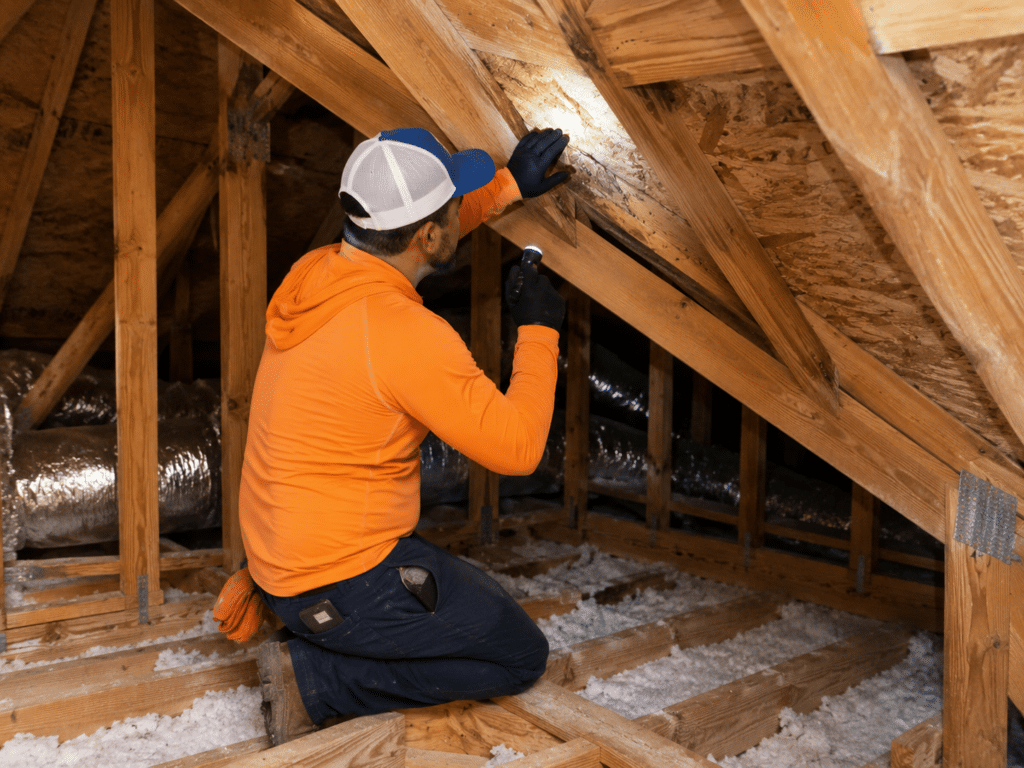
Our team examines accessible areas for active termites, previous damage and conditions that may increase the risk of termite activity.
Depending on the property, the inspection may include checking the building foundation, attic, garage, plumbing, and moisture related areas.
After the inspection, we explain what was found and recommend the most appropriate next steps.
Termite treatment is not one-size-fits-all. Recommendations depend on the termite species, location of activity, construction of the property and extent of the infestation. Treatment options may include:
1. Termite bait station installation 2. Targeted soil treatment 3. Localized treatments 4. Direct treatment of accessible affected areas
We focus treatment on the termite activity and conditions identified during the inspection rather than applying unnecessary products throughout the property.
Monitoring and Follow-Up
Termite control may require continued monitoring after the initial treatment. Bait stations must be inspected and maintained, while treated areas may need follow-up evaluation to confirm that activity is declining.
We explain the recommended monitoring schedule and any warranty or renewal options associated with your termite program.
Termite Baiting Systems
Termite baiting is an effective option for protecting many Southwest Florida properties from subterranean termites.
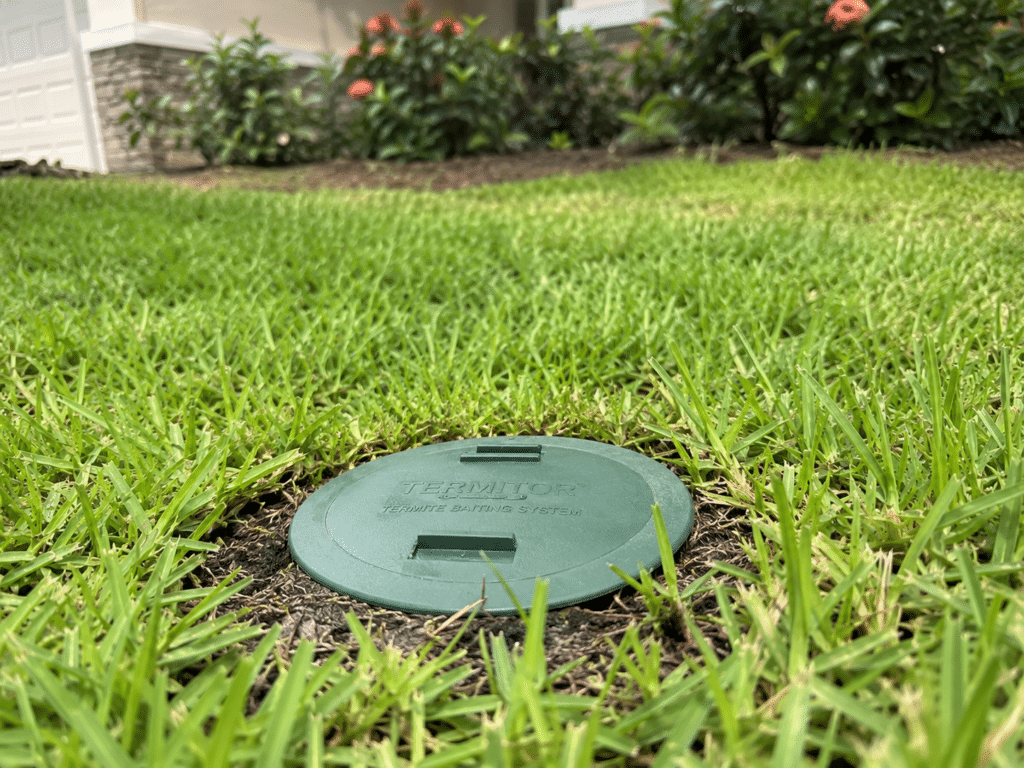
Stations are installed in the soil around the exterior of the structure and placed where termites can discover them while foraging. Once termites begin feeding on the bait, the active ingredient is carried back through the colony.
Termite bait stations are not simply installed and forgotten. At Crews Complete, we perform regular inspections and ongoing maintenance to remain effective against termites year round.
Localized Drywood Termite Treatments
Not every drywood termite infestation requires the same treatment method. When activity is limited to an identifiable and accessible area, a localized treatment may be an appropriate option.
Localized treatment involves applying professional termite-control products directly into affected wood, galleries, wall voids or other concentrated areas.
WDO Inspections and Reports
A Wood-Destroying Organism inspection, commonly called a WDO inspection, evaluates accessible areas of a structure for visible evidence of termites and certain other wood-destroying organisms.
Our trained team inspects accessible areas of the structure and completes the appropriate documentation based on the conditions observed at the time of inspection.
A WDO inspection may identify: • Visible evidence of active wood-destroying organisms • Evidence of previous activity • Accessible areas of wood damage • Conditions that may be conducive to infestation • Existing signs of treatment, when visible
A WDO report is an inspection of visible and accessible conditions. It is not a guarantee that concealed activity does not exist behind walls, beneath flooring or inside other inaccessible areas.
Crews Complete partners with home builders, general contractors and construction companies to provide termite pretreatments for new residential and commercial construction. Depending on the construction method and project requirements, service may include:
• Soil treatment before the concrete slab is poured • Treatment around plumbing and utility penetrations • Treatment of foundation areas • Treatment of adjoining slabs and additions • Documentation of the treatment performed • Scheduling around construction timelines and inspections
Need a Reliable Pretreatment Partner?
We work to make the termite portion of the construction process straightforward, documented and completed on schedule.
Whether you have one upcoming slab or multiple active projects, Crews Complete can provide dependable local support.
01
Responsive Scheduling
We coordinate with the construction team to schedule treatments around slab preparation, concrete pours and other important project milestones.
02
Treatment Documentation
We maintain records of completed termite pretreatments and provide the necessary service documentation for the project.
03
Local Communication
Calls are answered by a local team that can communicate directly with superintendents, builders, office staff and project managers.
We are a locally owned, family-operated pest control company based in Fort Myers—not a national call center or franchise.
Multiple Termite Solutions
We offer termite baiting, soil treatments, localized drywood treatments, WDO reports, construction pretreatments and ongoing monitoring.
Residential, Commercial and Construction Experience
Our team works with homeowners, businesses, builders, contractors, real estate professionals and property managers throughout Southwest Florida.
Clear Documentation and Communication
From WDO reports to construction pretreatment records, we understand that termite work often requires more than a treatment appointment. It also requires organized documentation and timely communication.
Local and Family Owned
200+ 5-Star Reviews
Residential and Commercial Termite Experts
Licensed and Insured
Request your free quote online
Expert Pest Control serving all of Southwest Florida.
Termite Control and Prevention across Southwest Florida
What are the most common signs of termites?
Common signs include discarded wings, mud tubes, termite droppings, hollow-sounding wood, blistered paint and visible damage to wooden materials. Termites may also be present without obvious visible signs.
Do you perform tent fumigation?
No. Crews Complete does not perform whole-home or whole-structure tent fumigation.
We offer localized drywood termite treatments for qualifying infestations, along with termite baiting, soil treatments, subterranean termite control, construction pretreatments and monitoring.
Does regular pest control prevent termites?
General household pest control and termite protection are separate services. A standard pest control program is not a substitute for termite treatment, baiting, monitoring or a termite warranty.
Do you provide WDO reports for real estate closings?
Yes. Crews Complete works with buyers, sellers, real estate agents, investors and property managers who need Wood-Destroying Organism inspections and reports.
Do you provide termite pretreatments for new construction?
Yes. We partner with builders, contractors and construction companies to provide termite pretreatments during the appropriate construction stage with documentation.
Are termite swarmers always a sign of an infestation?
Swarmers indicate that a mature termite colony is nearby. Swarmers found indoors may be a stronger indication of activity within or immediately around the structure.
A professional inspection can help determine what type of insect is present and whether termite treatment is needed.
Call Now
Email Us
Text Us
Cookie Consent
We use cookies to monitor our website's performance. View our privacy policy to learn more.
Cookie Preferences
Manage your cookie preferences below:
Essential cookies enable basic functions and are necessary for the proper function of the website.
Name
Description
Duration
Cookie Preferences
This cookie is used to store the user's cookie consent preferences.
30 days
These cookies are needed for adding comments on this website.
Name
Description
Duration
comment_author
Used to track the user across multiple sessions.
Session
comment_author_email
Used to track the user across multiple sessions.
Session
comment_author_url
Used to track the user across multiple sessions.
Session
Statistics cookies collect information anonymously. This information helps us understand how visitors use our website.
Google Analytics is a powerful tool that tracks and analyzes website traffic for informed marketing decisions.
Used only with old Urchin versions of Google Analytics and not with GA.js. Was used to distinguish between new sessions and visits at the end of a session.
End of session (browser)
__utmz
Contains information about the traffic source or campaign that directed user to the website. The cookie is set when the GA.js javascript is loaded and updated when data is sent to the Google Anaytics server
6 months after last activity
__utmv
Contains custom information set by the web developer via the _setCustomVar method in Google Analytics. This cookie is updated every time new data is sent to the Google Analytics server.
2 years after last activity
__utmx
Used to determine whether a user is included in an A / B or Multivariate test.
18 months
_ga
ID used to identify users
2 years
_gali
Used by Google Analytics to determine which links on a page are being clicked
30 seconds
_ga_
ID used to identify users
2 years
_gid
ID used to identify users for 24 hours after last activity
24 hours
_gat
Used to monitor number of Google Analytics server requests when using Google Tag Manager
1 minute
_gac_
Contains information related to marketing campaigns of the user. These are shared with Google AdWords / Google Ads when the Google Ads and Google Analytics accounts are linked together.
90 days
__utma
ID used to identify users and sessions
2 years after last activity
__utmt
Used to monitor number of Google Analytics server requests
10 minutes
__utmb
Used to distinguish new sessions and visits. This cookie is set when the GA.js javascript library is loaded and there is no existing __utmb cookie. The cookie is updated every time data is sent to the Google Analytics server.